How green is Western Carolina University?

On paper, WCU is among the top universities in the nation in terms of participation in various green initiatives, but the students say we can do more.

WCU recently placed in The Princeton Review’s Guide to 322 Green Colleges.  The review points out a specific initiative, “Reducing Our Carbon Paw Print,” which was designed to help reduce energy usage on campus and spread awareness about how our energy usage can impact the environment.

Another program designed to cut our energy consumption is Battle of the Plug, a national competition that pits schools against their rivals in a battle to reduce energy consumption over the course of three weeks.  This year, WCU lost to Appalachian State University with only a 0.2 percent reduction.

Despite our loss to ASU, Western is still a leader in energy reduction among schools in the UNC system. According to WCU Green Energy Manager Lauren Bishop, we were the first to reduce our energy consumption when North Carolina required all UNC schools to slash energy usage by 30 percent before 2015.  Western met the challenge in three years, reducing its energy consumption by 34 percent as part of the Strategic Energy Plan. “We’re the best in the state at reducing energy use,” Bishop said.

WCU has taken part in other competitions as well, including the nationwide effort RecycleMania, which reports how much trash is collected at various universities and how much is recycled.  WCU has also held a Recycled Sled Competition in which students created sleds using 90 percent recycled materials.

Beyond competitions, Western Carolina University has its own Sustainability Council, made up of various sub-councils dedicated to various aspects of sustainability, such as student and community outreach and integrating sustainability in the classrooms.

The Sustainability Council is under WCU’s Energy Management section of Facilities Management.  The department is dedicated to making Western a greener place by creating green events, participating in community outreach and focusing on the conservation of energy and resources.

“Our holistic approach is through programs and student groups on campus,” said Bishop.

Students are also doing their part in creating a greener campus.  The student group EcoC.A.T.S (Campus Awareness Team for Sustainability) puts on events to spread awareness of what students and community members alike can do to help the environment.  Events have ranged from free screenings of documentaries to recycling drives during football games.

WCU Dining Services has also done its fair share to reduce its carbon footprint, including donating food waste to local hog farmers, recycling napkins and napkin dispensers and using green cleaning supplies.

Even buildings on campus are going green.  The new Health and Human Sciences building is certified by the Leadership in Energy and Environmental Design (LEED).  The HHS building offers large windows to allow for natural light and a rooftop garden, which keeps the building cool without using as much energy.  The newly renovated Harrill Hall has the same certificate and features geothermal heating and rainwater collectors.

Though WCU has been recognized as a relatively green school, not everyone would agree.

“We are so not green,” said student Jessica Grant. “We have recycling bins, but they’re not cleaned out enough.  Students will go to recycle and see it’s completely full and throw it in the trash.  Water consumption I guess we’re okay with.  There’s a few things Western could do to be a lot greener.  We have so much wind here.  If we could just have one wind turbine, it would cut down on electricity.”

WCU has recently added 68 new recycling bins on campus, hoping to encourage students to reduce, reuse and recycle and further boost our rating as a green school.

Video by Kathleen Kiser

Marine and plant farming merge in aquaponics

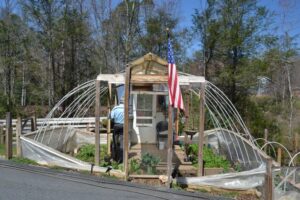
Randy Reinke built this aquaponics system in the WCU campus greenhouse.  Photo by Ben Haines.
Caption
Randy Reinke built this aquaponics system in the WCU campus greenhouse. Photo by Ben Haines.
The aquaponics system consists of a gravel bed containing plants and a water tank filled with fish.  Photo by Ben Haines.
Caption
The aquaponics system consists of a gravel bed containing plants and a water tank filled with fish. Photo by Ben Haines.
The fish tank is populated by koi and goldfish.  Photo by Ben Haines.
Caption
The fish tank is populated by koi and goldfish. Photo by Ben Haines.
Before the water even enters the fish tank, this machine dechlorinates it.  Photo by Ben Haines.
Caption
Before the water even enters the fish tank, this machine dechlorinates it. Photo by Ben Haines.
As the fish live and eat in the tank, the waste-filled water is transferred through this hose into the gravel bed, where bacteria break down the nitrogen byproducts in the water and leave the waste nutrients behind for the plants to consume. Photo by Ben Haines.
Caption
As the fish live and eat in the tank, the waste-filled water is transferred through this hose into the gravel bed, where bacteria break down the nitrogen byproducts in the water and leave the waste nutrients behind for the plants to consume. Photo by Ben Haines.
This filter cleans the water in the gravel bed so it can be recirculated into the fish tank.  Photo by Ben Haines.
Caption
This filter cleans the water in the gravel bed so it can be recirculated into the fish tank. Photo by Ben Haines.
The freshly cleaned water drains back into the fish tank through this pipe.  Photo by Ben Haines.
Caption
The freshly cleaned water drains back into the fish tank through this pipe. Photo by Ben Haines.
This device feeds the fish.  Photo by Ben Haines.
Caption
This device feeds the fish. Photo by Ben Haines.
Cullowhee lilies.  Photo by Ben Haines.
Caption
Cullowhee lilies. Photo by Ben Haines.
Zinnia.  Photo by Ben Haines.
Caption
Zinnia. Photo by Ben Haines.
Young cucumber plants.  Photo by Ben Haines.
Caption
Young cucumber plants. Photo by Ben Haines.
This mysterious flower was retrieved from a discarded Easter bouquet in the trash at Scott Residence Hall. It was initially red and tightly packed but it bloomed when planted. Photo by Ben Haines.
Caption
This mysterious flower was retrieved from a discarded Easter bouquet in the trash at Scott Residence Hall. It was initially red and tightly packed but it bloomed when planted. Photo by Ben Haines.

Randy Reinke is a new graduate of Western Carolina University with a bachelor of science degree in natural resource conservation and management. He spent his senior year developing a fully functional aquaponic farming system in the WCU campus greenhouse.

What is aquaponics? It is a hybrid of two different farming techniques.

The cultivation of plant life in water is called hydroponics, while the raising of aquatic animals in tanks is known as aquaculture. Aquaponics combines both of these practices to create a symbiotic food production system.

An aquaponic system consists of a water-filled tank containing marine organisms and a bed of growing plant life, with machines that keep the two groups sustained by each other’s biological processes. It allows farmers to grow healthy fish, prawns or crayfish together with vegetation in a very efficient, interconnected setup.

As the aquatic animals live and eat in the water, waste and other effluents accumulate over time. The waste-filled water is transferred through a hose into a bed of soil or gravel.

Bacteria in the bed act as a biofilter by breaking down the harmful nitrogen byproducts in the water while leaving behind the waste nutrients which feed the plants. The water is then siphoned through a filter, cleaned and redistributed back into the marine tank.

Because the plants use marine animal waste as food, there is no need for fertilizers, which can cause dead zones when they enter streams, lakes and oceans. The entire process is designed to have as minimal of a lasting impact on the environment as possible.

“Our current farming practices are destroying our land and our water, so it’s very important that we begin to explore new and more efficient ways to grow our food without the destruction to the environment,” Reinke said.

Reinke first got involved with aquaponics when his neighbor asked for help to build an outdoor aquaponic system. “It captured my interest because while we were building the system, most of the country was experiencing a drought,” Reinke said. “Aquaponics has been recorded as using as little as 10 percent of the water that traditional field crops require.”

After helping his neighbor, Reinke built his own aquaponic system in his apartment. He then asked his university advisor, Dr. Brian Kloeppel, about making a school project out of it. Kloeppel suggested that Reinke build another system in the campus greenhouse.

“I wasn’t sure at first,” Reinke said, “but then I realized it would be a good opportunity for me to use the system as a model for a small business plan and would allow students to see a non-traditional food production method that, if done right, can be much less harmful to our water and soil.”

Reinke got permission to use the greenhouse from Dr. Kathy Mathews, who was more than happy to allot him the space. He then submitted proposals for grants to the Honors College, the Natural Resources Conservation Management Department (NRCM) and the Quality Enhancement Plan (QEP).

Kloeppel proofread the proposals and wrote letters of endorsement saying that he believed the funds would be put to good use and the project would be completed. “I couldn’t have built this system without him,” Reinke said.

Reinke received the grant from the Honors College but was denied the QEP grant. However, the NRCM Department not only approved him for the NRCM enrichment funds but also allocated some of the QEP funds that the department had received this year. Additionally, Dr. Jerry Miller provided money from the Blanton Whitmire Endowment to buy gravel.

Anna Thompson of the Department of Geosciences and Natural Resources and Bonnie Beam of the Honors College helped out by using the grant money to make all of the purchases for Reinke’s system with university credit cards and purchase orders.

Since Reinke did not get the total amount of money he had requested in grants, he got creative and redesigned his aquaponic system to be more cost-effective. He built the fish tank out of reclaimed lumber instead of buying a new one.

When it came time to select fish for his system, Reinke applied for an aquaculture permit for tilapia with the N.C. Department of Agriculture. Though he was approved, Reinke had a difficult time obtaining the fish so he tried to get catfish instead.

Unfortunately, the truck transporting the catfish broke down in transit and it would have been another month before the next delivery, so Reinke opted to go with koi and goldfish. “Although they are not edible, they produce a ton of waste and are great for aquaponic systems,” Reinke said.

Reinke planted vegetables including cucumbers, bell peppers, Cherokee purple tomatoes, peas and lettuce, as well as several wildflowers such as morning glories and Cullowhee lilies. Reinke selected Cullowhee lilies because he hoped it would help draw interest and possibly provide a way to breed them so people can plant them around Cullowhee.

Now that Reinke has graduated, the fate of his aquaponic system in the WCU greenhouse is up in the air. Anja Nothdurft, president of the Campus Kitchen Garden Club, will maintain the system throughout the summer but will not be able to continue with it in the fall.

“I think it would be awesome for students, faculty and the community to get involved,” Reinke said. “I put a lot of hard work into that system and it would be a shame for it to be forgotten about when I leave.”

If you would like to help carry on the legacy of Randy Reinke’s aquaponics endeavor at WCU, send him an email at rareinke1@catamount.wcu.edu.

“I would love to show anyone interested and answer any questions they have,” Reinke said.

Impact of Tuck River cleanup

Troy Adams, WCU graduate student finds hubcap at Tuck River Cleanup

Western North Carolina is committed to maintaining the serene beauty that the region has to offer. This year marks the 29th anniversary of the Tuck River Cleanup, a testament to the support of the community at Western Carolina University.

“The Tuck River Cleanup is our yearly rehabilitation effort to maintain the natural beauty of this important resource”, said Jenna White, graduate assistant at Base Camp Cullowhee.

The Tuck River Cleanup has a significant ecological impact on the area. The importance of cleaning the Tuckaseegee River specifically, is that it has a huge watershed that flows through all of Jackson County. The river begins above Cullowhee, goes through the Glenville reservoir and flows through Panthertown Valley all the way to Fontana.


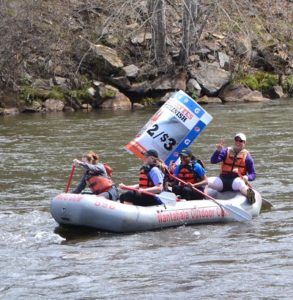
The amount of trash collected from the Tuck River Cleanup into Fontana is immense.  Several tons of trash is removed each year from the Tuckaseegee River as a result of the annual cleanup. This year, two 30-yard rollout containers, each half-filled with garbage were collected. Some of the most common things removed include shopping bags, tires, cans and bottles.

“It’s great to see students from different areas to take such a strong involvement to clean our county’s resources,” said Jennifer Bennett, assistant director of outdoor programs at Base Camp Cullowhee.

Approximately 670 people attended the Tuck River Cleanup this year. The cleanup took place from the start of Cullowhee Dam to Barker’s Creek and this stretch was cleaned continuously throughout the day.

Scott’s Creek in Sylva is a major tributary of the Tuckaseegee River and the amount of trash in that area is substantial. The Rotary Club and the Watershed Association of the Tuckaseegee River (WATR) have cleaned different stretches of Scott’s creek this year.

Nantahala Outdoor Center and Duke Energy were major contributors to the cleanup initiative this year. Their involvement reflects the importance of the Tuck River Cleanup to the community and shows their commitment to environmental issues.

The Tuck River Cleanup is the largest event that Base Camp Cullowhee puts on annually in numbers of participants. The Tuck River Cleanup was started in 1984 with several faculty members and students in canoes cleaning up the river. It has since evolved into the largest single-day river cleanup in the United States.

“The Tuck River Cleanup is a great opportunity for students and community members to work collaboratively on an important project”, said Bennett.

Related Posts:

Spring cleaning the Tuck

Students get involved with national forest revisions

Students in the America's Wilderness Ethics and Aesthetics class wait on the van to arrive.  Photo by Brandy Carl
Caption
Students in the America's Wilderness Ethics and Aesthetics class wait on the van to arrive. Photo by Brandy Carl
The public had the chance to view poster boards outlining various issues within the forests as well as general information.  Photo by Brandy Carl.
Caption
The public had the chance to view poster boards outlining various issues within the forests as well as general information. Photo by Brandy Carl.
Rangers gave presentations during the meeting.  Photo by Brandy Carl.
Caption
Rangers gave presentations during the meeting. Photo by Brandy Carl.
Rangers were also available to answer questions.  Photo by Brandy Carl.
Caption
Rangers were also available to answer questions. Photo by Brandy Carl.
Clay Hudson took notes during ranger presentations.  Photo by Brandy Carl.
Caption
Clay Hudson took notes during ranger presentations. Photo by Brandy Carl.
Students were able to interact with forest rangers.  Photo by Brandy Carl.
Caption
Students were able to interact with forest rangers. Photo by Brandy Carl.
The public met with rangers to give their input on changes needed.  Photo by Brandy Carl.
Caption
The public met with rangers to give their input on changes needed. Photo by Brandy Carl.
The audience had the chance to meet with other members and discuss their ideas.  Photo by Brandy Carl.
Caption
The audience had the chance to meet with other members and discuss their ideas. Photo by Brandy Carl.
Participants wrote notes explaining how the national forests benefit both indviduals and Western North Carolina.  Photo by Brandy Carl.
Caption
Participants wrote notes explaining how the national forests benefit both indviduals and Western North Carolina. Photo by Brandy Carl.
Students broke off into groups to discuss what they learned.  Photo by Brandy Carl.
Caption
Students broke off into groups to discuss what they learned. Photo by Brandy Carl.
Henderson, who led the class, examined the post boards and spoke with other community members.  Photo by Brandy Carl.
Caption
Henderson, who led the class, examined the post boards and spoke with other community members. Photo by Brandy Carl.
After the meeting adjourned, students helped with the clean up process.  Photo by Brandy Carl.
Caption
After the meeting adjourned, students helped with the clean up process. Photo by Brandy Carl.

Students in David Henderson’s America’s Wilderness Ethics and Aesthetics class had the chance to experience a real world problem-solution environment.

Ten students from Henderson’s class piled into two vans and traveled to Brevard for the Pisgah Ranger District meeting.  The meeting takes place in a series of Nantahala-Pisgah National Forest meetings set to revise the current management plan.

“I’m interested in the outdoors and just though it would be interesting seeing how everything is managed and taken care of,” said student Clay Hudson.

“In the class we talk a lot about how different values get expressed in land use and how decisions get made for preserving and protecting this or using that and debates between them, so I thought it would make it real, make it live for them to see the decisions being made,” said Henderson.

Those who attended had the chance to leave input for the assessment phase of the revision and have their voices heard.

“I thought it would be interesting.  I figured it would be nice to know what’s going on and see if I could help,” said student and Brevard native Emily Williams.

According to Henderson, he received positive feedback and high levels of engagement from the students.

Environmental health students gain hands-on experience

Cane Creek in Cullowhee. Photo by Bayleigh Davis

A team of Western Carolina University students teamed up with the Jackson County Health Department and the Watershed Association of the Tuckasegee River to monitor the quality of nearby creeks.

WCU professor Tracy Zontek teaches a course on water quality every fall under the environmental health program.  Last semester Zontek’s students began to monitor various sites along Cane Creek, located just outside of campus off Old Cullowhee Road, with the help of the Jackson County Health Department.

“The Jackson County Health Department is a tremendous supporter of the WCU environmental health program,” said Zontek.

The health department has not only taken interns from the program but also provided multiple lectures in the past. [Read more...]

Sylva paper factory cares for the environment

Jackson Paper Manufacturing in Sylva is the largest producer of 100 percent recycled paper in North Carolina.  The company utilizes several measures to minimize its impact on the environment, with systems in place to prevent any discharge into local waterways and no harmful emissions released into the air.

Switch to our mobile site